Paid Internship
User Research
Product Design
Graphic Design
ShelterCare Handbook
House of Friendship
2-5 minute read
I was fortunate to work as a UX design intern for a men's 24/7 homeless shelter! I was tasked to streamline their intake process and improve the facility for staff & homeless individuals. I successfully made great connections, designed a handbook and deliverables & offered research-backed recommendations.
Overview

Contents
Team
My Role
Tools Used
Timeline
Hania Khawar
Nida Shanar
Led the user research, usability testing,
and prototyping/graphic design.
4 months (May-Aug 2023)
Canva
UserBit
Google Docs
Microsoft Excel
Background
House of Friendship ShelterCare in Kitchener, Waterloo is a 24/7 shelter for men experiencing homelessness.


Project Objectives
1
2
Re-design, streamline & enhance the shelters current intake process to benefit shelter residents, staff & management.
Give recommendations on all other aspects of House of Friendship ShelterCare through a final report.

Initial Research & Brainstorming
Empathizing with our main users: shelter residents, staff & management by…
Taking notes throughout allowed us to organize our thoughts and remember important information for the future.
Taking Notes 📝
Intake Shadowing 👀
We shadowed the social work staff during their shifts and intake processes to gain a deeper understanding of their roles and responsibilities.


Competitive Analysis 💭
We visited SHIP, an overnight emergency shelter, to contrast how the intake process works there.

Services
24/7 Shelter
Private Rooms
On-Site Laundry
Showers & Private Bathrooms
Safe Use Place
Harm Reduction Training & Practice
Trauma Informed Training & Practice
Case Management
On-Site Meal and Food Services
On-Site Health Care Services
On-Site Employment Assistance & Services
Education Skills and Development
Therapy & Mental Health Counseling
Housing Assistance
Transportation Assistance
Life Skills Training
Recreational & Social Activities




Legal Aid
User Research
👥 Primary Research



User Interviews
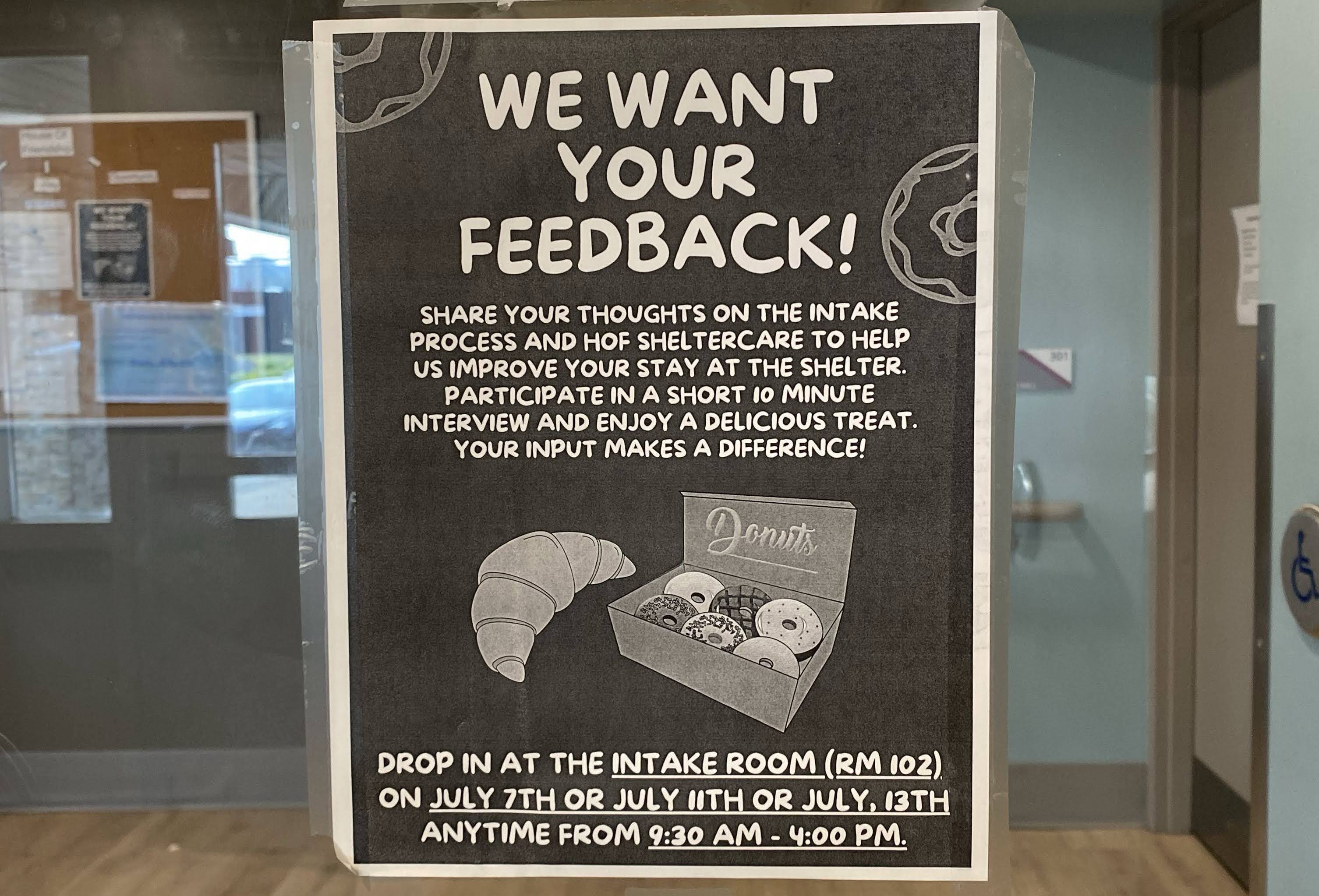
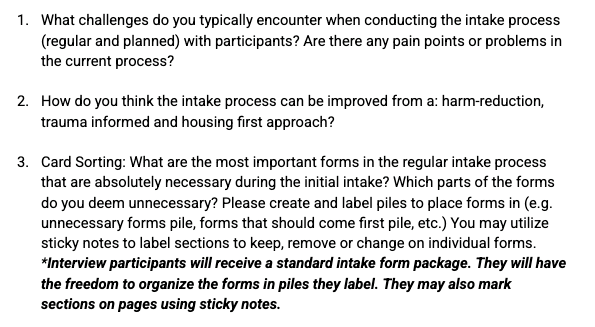
We formulated, iterated and re-iterated semi-structured in-person interview questions for shelter residents, staff & management for their thoughts on the current intake process and HoF ShelterCare in general.
Staff members
Management members
17
6
2
Shelter residents
Successfully interviewed 24 individuals consisting of…
Surveys
We formulated, iterated and rewrote survey questions for only shelter residents, in order to get more specific insight from them. Unfortunately, due to time constraints and management input, we did not get to execute the digital surveys.
Observational Insights
I jotted down insights I observed while working as a social worker in the facility and while talking to staff and shelter residents.
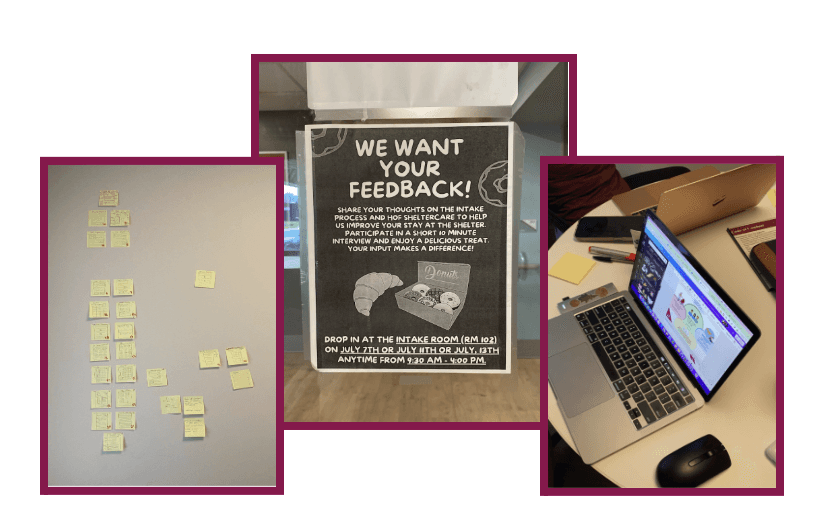
We used in-person open card sorting with staff & management where they were asked to re-organized intake documents into piles they saw fit. This was to see how they conceptualized the intake process.
Poster to recruit user interview participants.
Some questions asked to staff during user interviews.
📚 Secondary Research
Peer Reviewed Academic Sources
In order to better understand Ontario’s shelter system and the research that has already been conducted on this topic, we visited and read through homelesshub.ca 📝
Synthesis
In order to synthesize our research information, we used userbit;
an online UX tool that helps categorize research information.

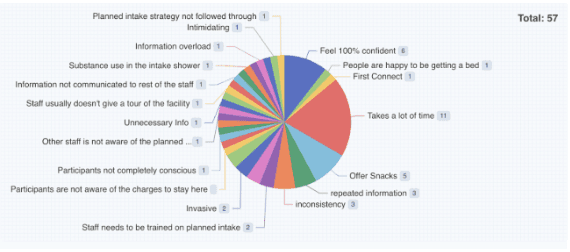
Research Findings
• Staff feel 100% confident
💼
✅ Intake Strengths
• Good as it is
🙍🏻♂️
• Rules & expectations explained well
🙍🏻♂️
General Findings
❌ Intake problems
• Services not mentioned
🙍🏻♂️
💼
• Inconsistent with each staff member
• Lacked clarity
🙍🏻♂️
• Takes too long
💼
💼 = Staff & Management
🙍🏻♂️ = Residents
Intake Process Findings
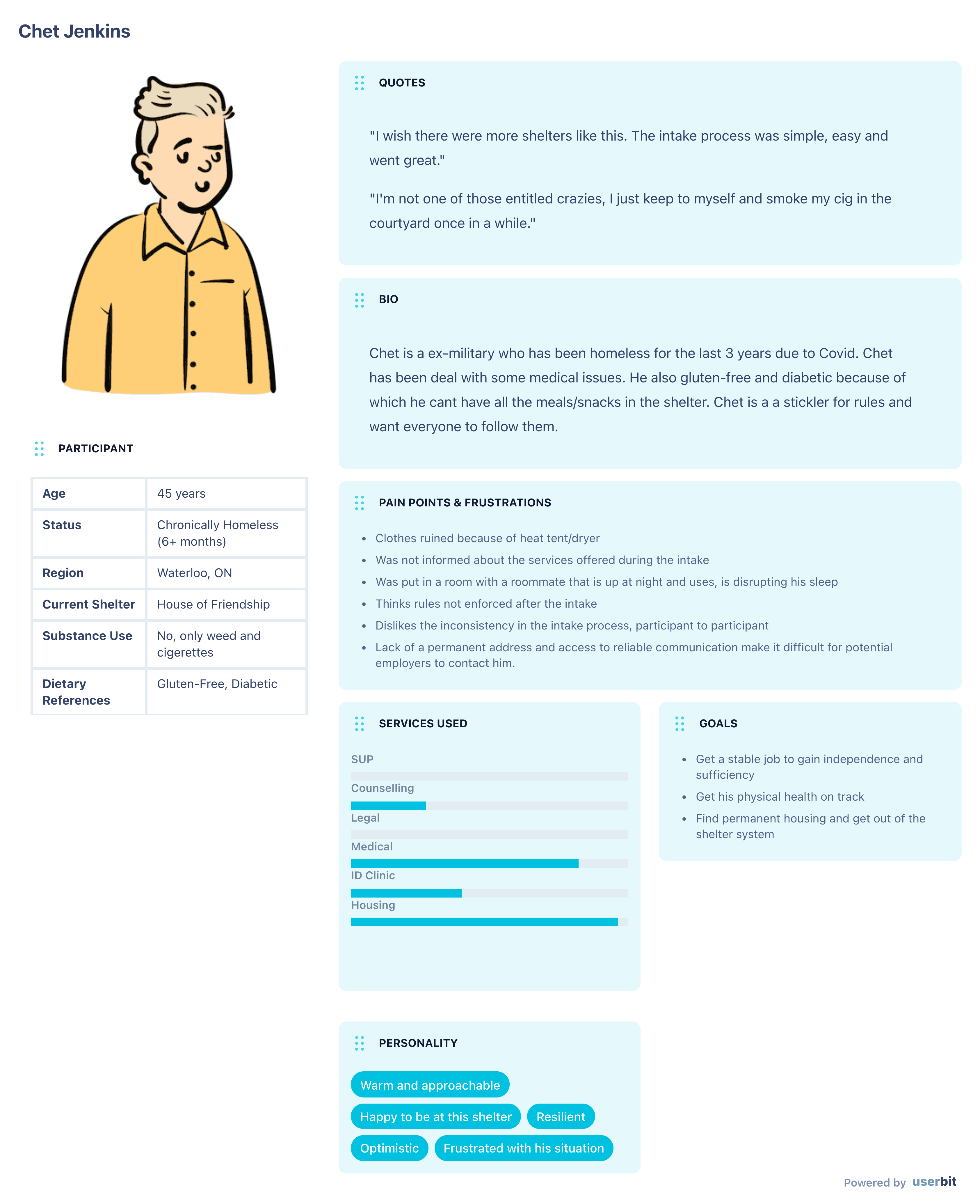
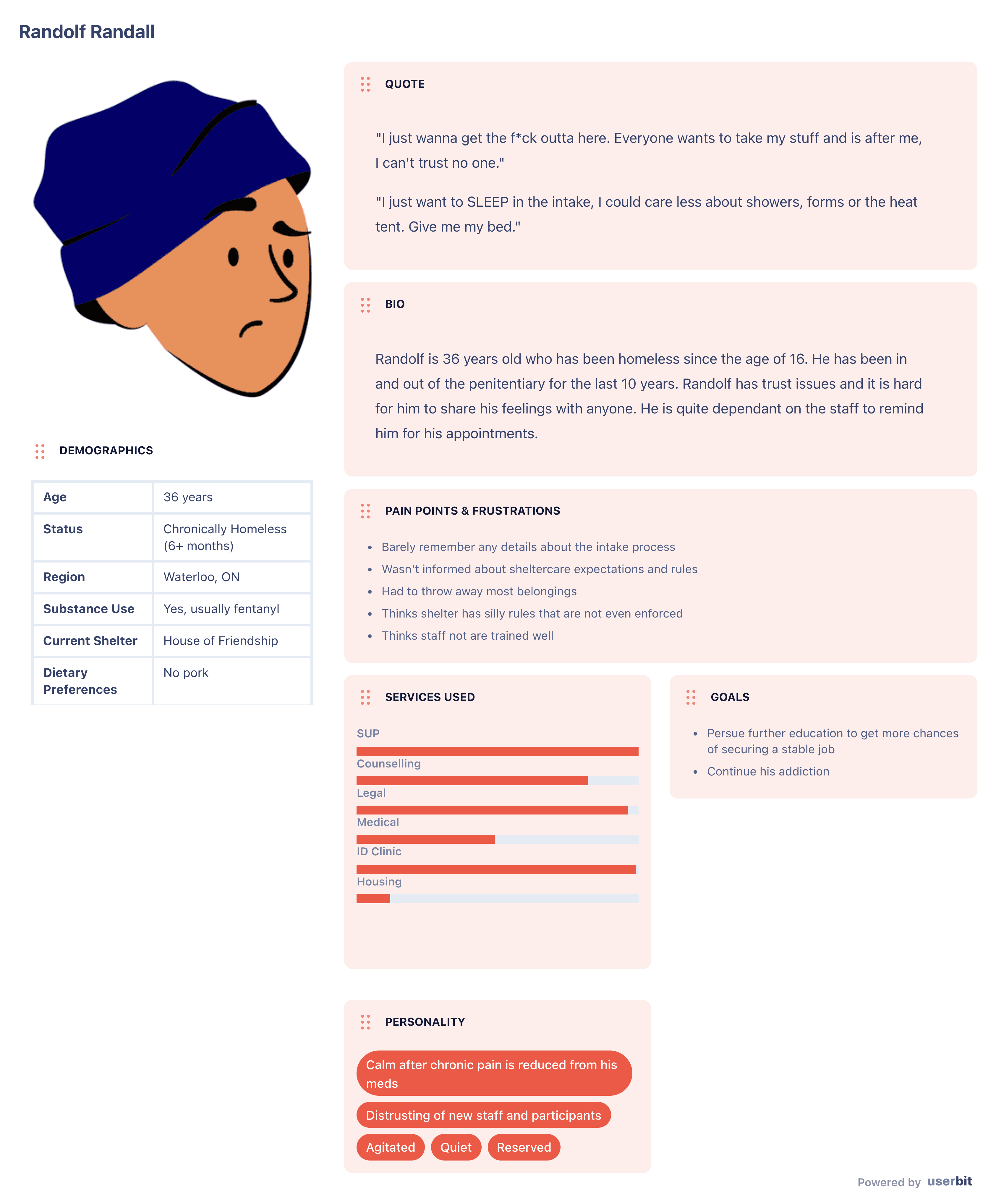
User Personas
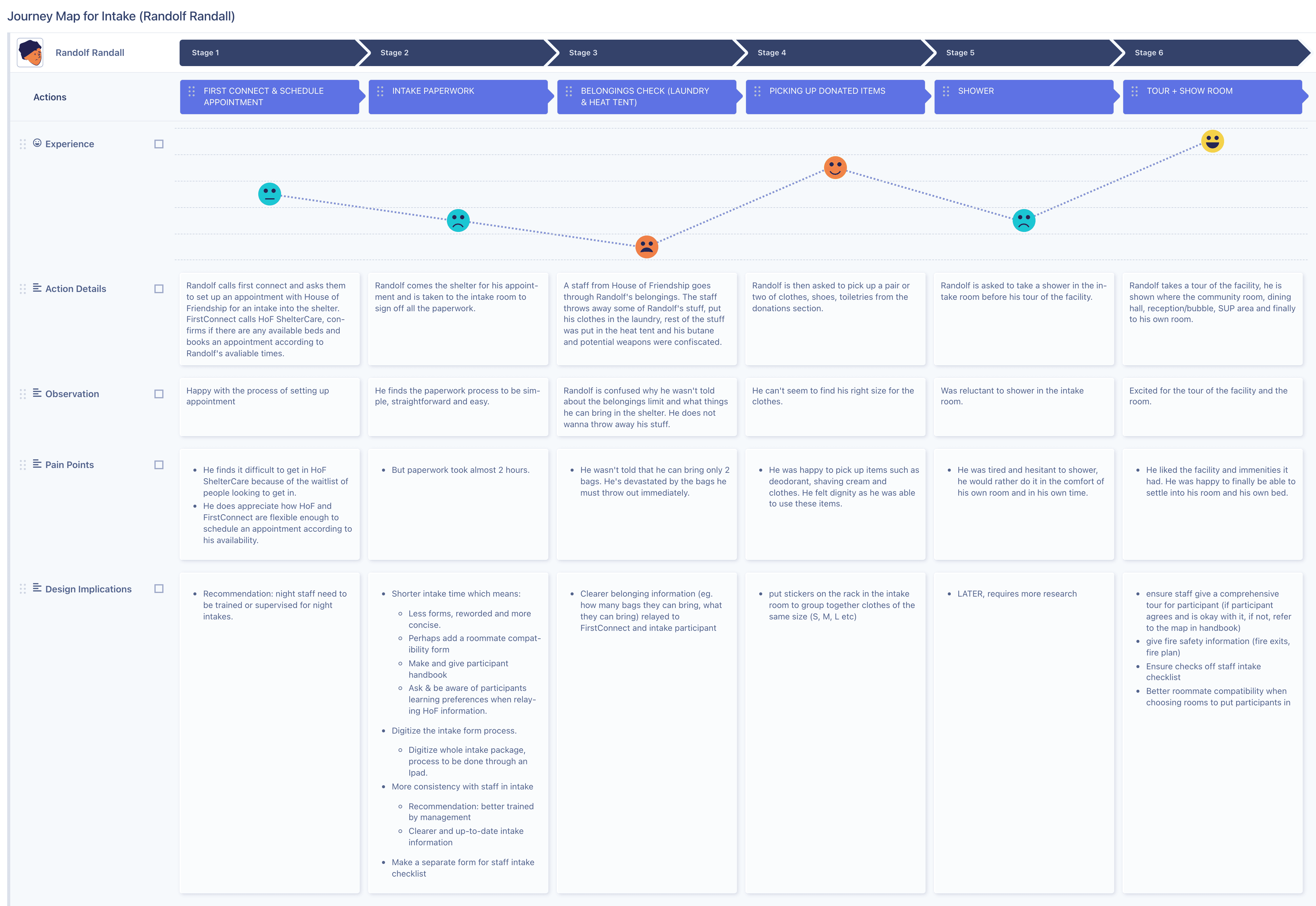
Journey Map

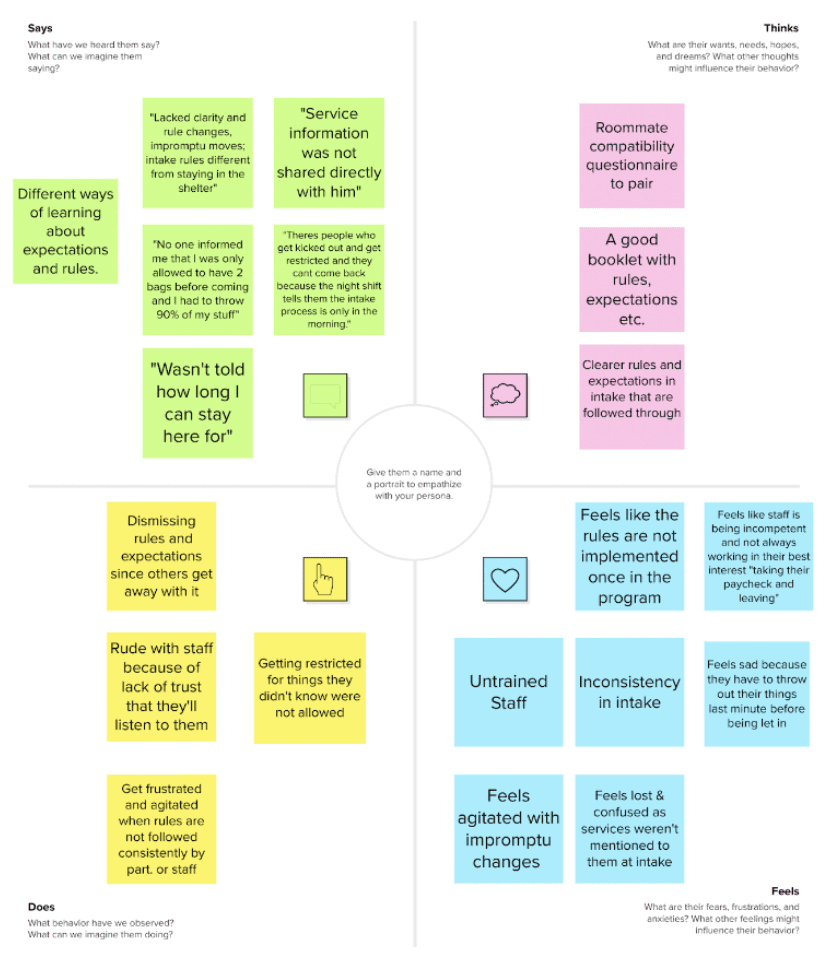
Empathy Map
Prototyping
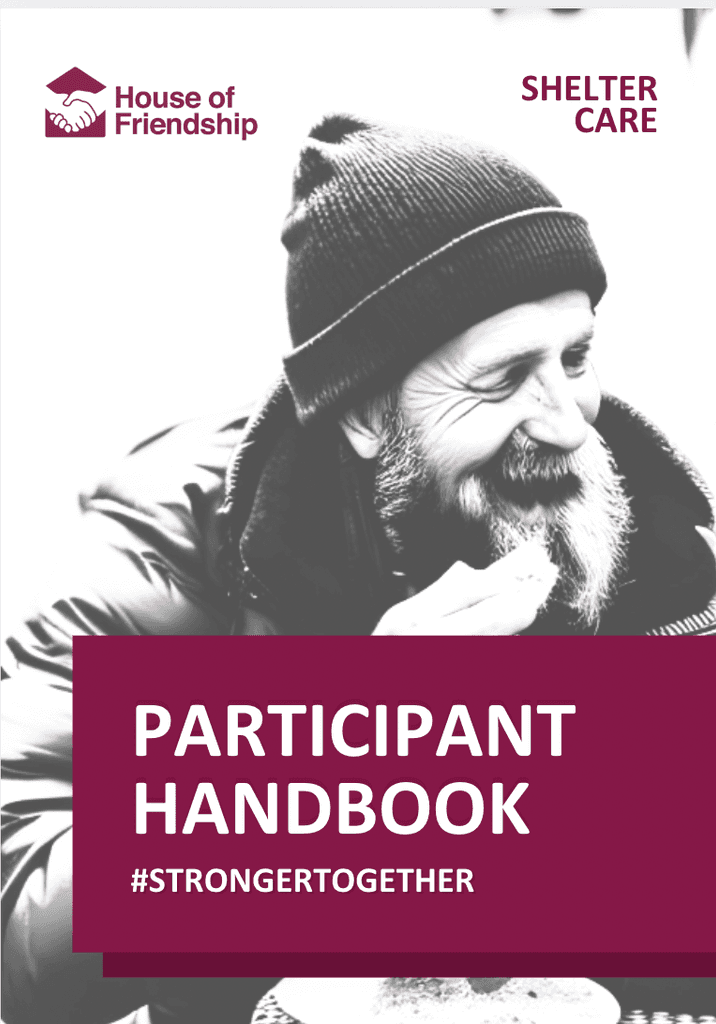
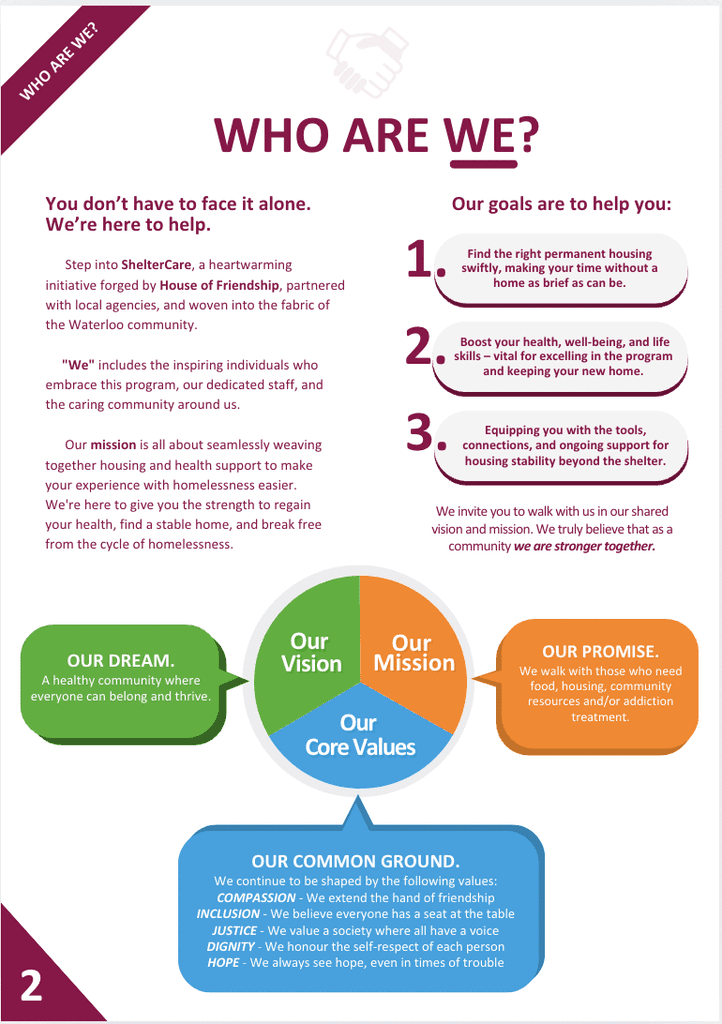
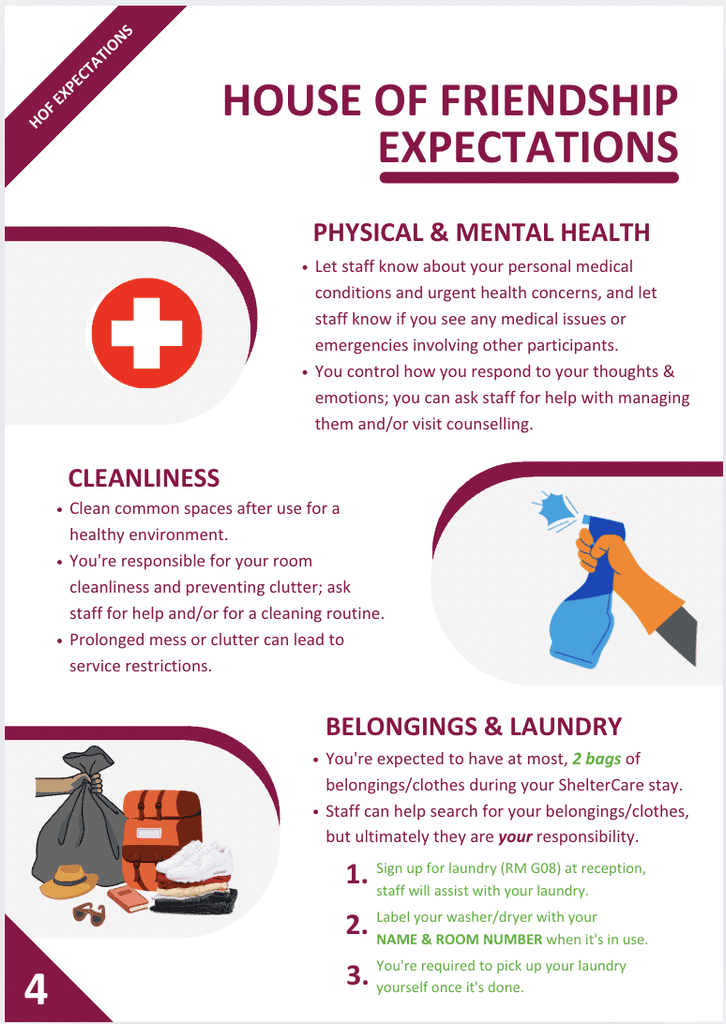
We set out to create a user-friendly handbook. This idea was guided by our research as our pain points and observational insights suggested that an user handbook for participants would be a good tool to mitigate problems participants, staff & management expressed.

Iterating & Testing
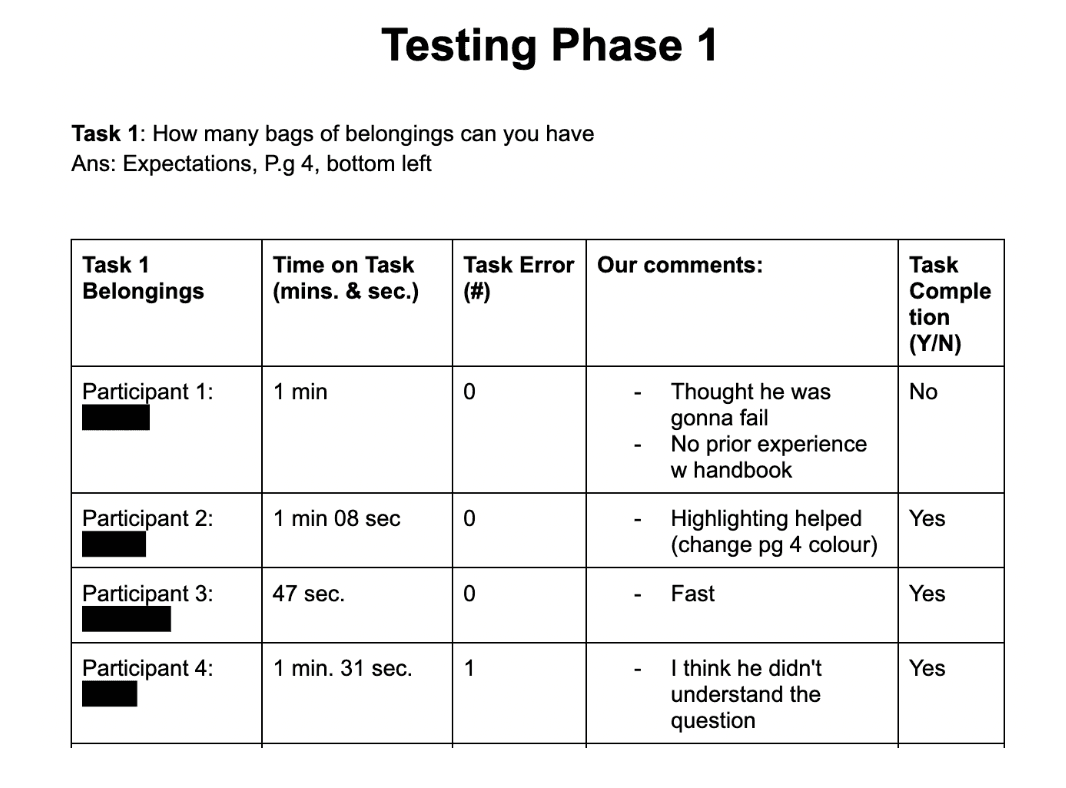
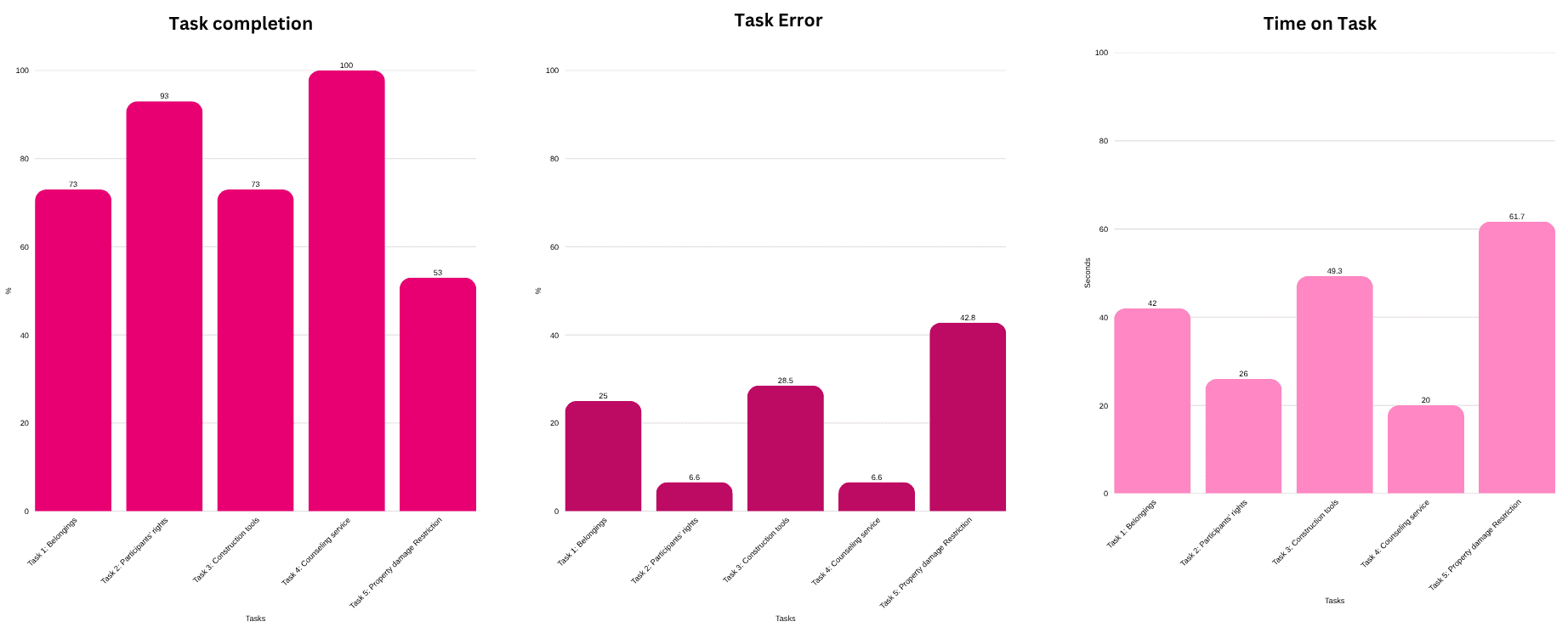
We conducted user testing with the handbook with residents and staff. We tested with 4 phases with 5 tasks each.
"The formatting and graphic and layout are really helpful.
It’s nice to have all the community service information in one place."
—Eric, Staff
Positive insights from 4 rounds of testing:
Highlighting key words in text.
Changed colouring of some pages.
Rewording questions and key words.
"Easy to follow. It’s really good didn't know all these places existed on the map."
Most participants found it easy to read and navigate the handbook.
Constructive insights:
Task 5: Property damage restriction is the biggest usability failure as participants don’t understand the wording or where to look on that page.
Task 4: Counseling service is the strongest design page as it includes clear wording, easy-to-scan, and matches user expectations.
Final Handbook, Deliverables & Impact
Other Deliverables…
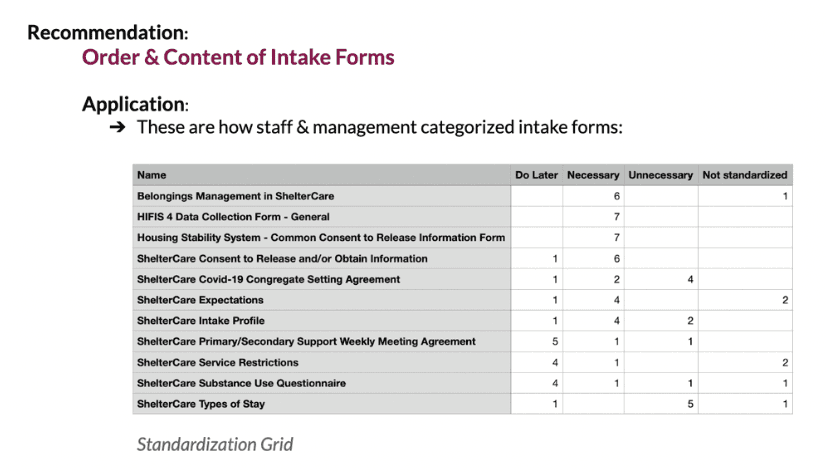
We created a final recommendations report, with summary of our UX process, research data and HoF recommendations and applications to these recommendations.
Recommendations Report

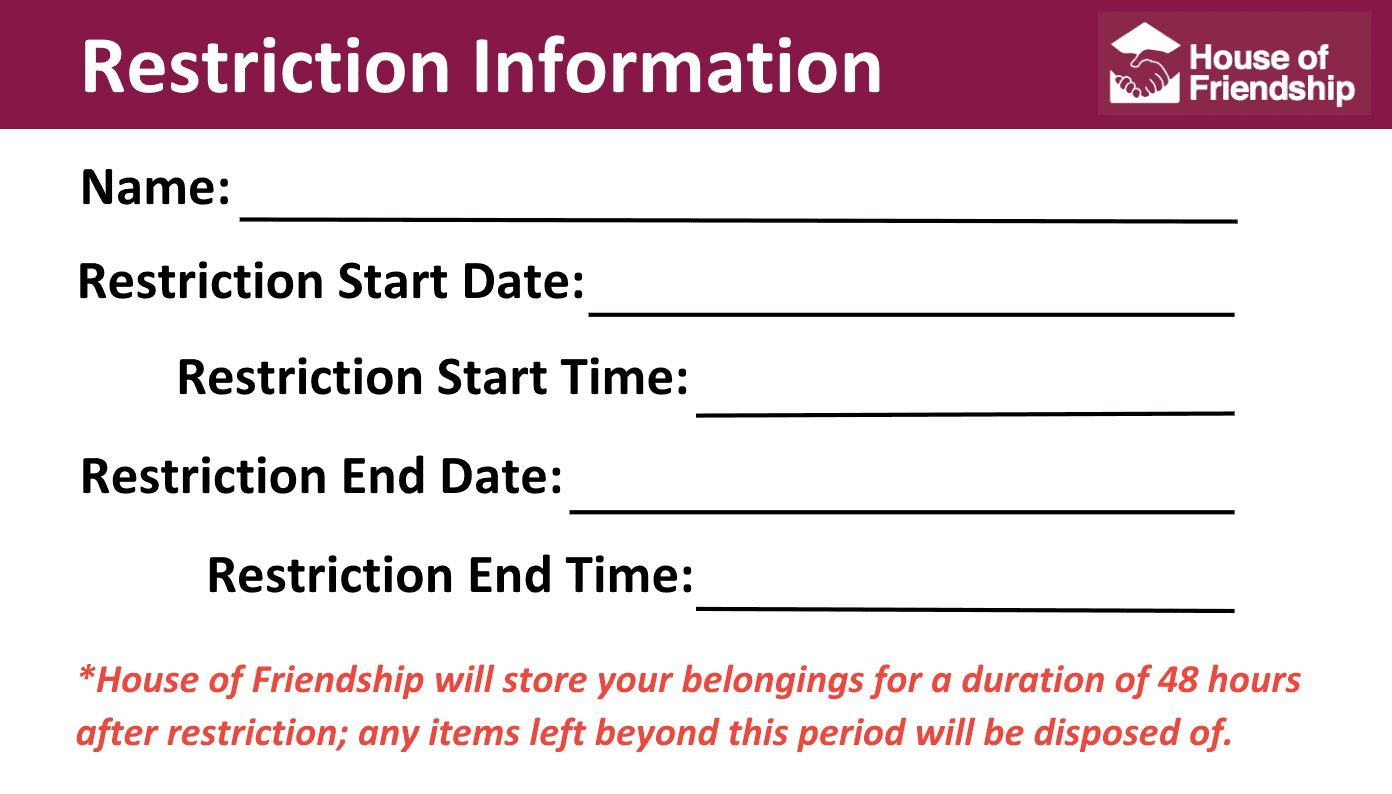
Based on HoF general insights and data,
we designed a restrictions card.
This is for residents who get temporarily restricted from the program, so they’re able to remember when to come back, and what services they can still access in the community.
Restrictions Card

Our data showed staff struggled with communication and tracking room usage for reassignment.
Using Microsoft Excel, I developed a night bed tracker sheet, day/evening/night notes tracking sheet, & a restrictions sheet to help staff organize their notes more clearly and efficiently.
Excel Trackers
After applying testing insights on the handbook, we landed on the final product. HoF plans on printing the handbook in-house and handing it out to all residents & staff.
"This is really nice. I would definitely use this."
—Big B, Shelter Resident
Constraints, Challenges & Further Iterations

Due to limited time, we didn’t have the capacity to reach out to and visit all the shelters we had hoped to include. However, I was still able to complete a comparative analysis with one shelter that has given us great insight.
Due to scheduling constraint we were unable to test with new intakes and engaging directly with our target users. However, we got all the insight we needed from existing participants and staff.
We also faced challenges in defining and developing clear objectives at the beginning of the process, but our objective became clear as we continued talking to shelter participants and communicated with management.


In the future, the handbook and other final products will likely change and be updated as ShelterCare is still new and constantly evolving.
What I learned
I improved my understanding of the shelter system, individuals experiencing homelessness
& teamwork under constraints.
Working in a shelter environment taught me that UX research requires genuine empathy and adaptability, you can't script everything when your users are navigating difficult circumstances. I learned to be flexible with methodology, make decisions with incomplete data, and design with dignity in mind.
This internship solidified that good design can have real human impact beyond screens. I gained great UX experience and met some interesting individuals with their own personal experiences and life stories about addiction and homelessness.